| TEAM | GP | W | L | OTL | GF | GA | DIFF | PTS |
|---|
W=2pts · OTL=1pt · L=0pts · Tiebreaker: Goal Differential → Goals For · Click a team for its game log
Looking for earlier seasons? Every year from 2011–2025 lives under HISTORY → SEASON STATS.
A player's rating is one continuous Elo across every league team, country, and Scream Hockey Open they've competed in, processed in true chronological order — so a returning player seeds on their full career. Flags show the nations a player has suited up for internationally; a 🏆 marks players who have competed in an Open. Open games count at reduced (20%) weight. Computed live in-page; some early seasons are incomplete, so figures are directional until run against the full game data.
Every game, every goal, every Saturday-night slate comes to you through three voices. They've called barnburners and blowouts, overtime thrillers and season-enders — and they've never missed a broadcast. Meet the crew behind Scream Hockey Weekly.

The voice that kicks off Saturday night. Graham opens the live broadcast, welcomes you in, and runs down the evening's slate — a title race, a grudge match, or a Tuesday-night clunker he'll somehow make sound essential. When the puck's about to drop, he's the one setting the stage.
When the highlights roll, he slides into the play-by-play chair and calls the goals as they drop. Crisp, unflappable, and never louder than the moment needs to be. If the live show has a center of gravity, it's Graham.

The mustache. The tweed. The belly laugh you can hear over the crowd. Reggie is the color man, and there's nobody who loves this game more. Pregame is his stage — he sits down with Rusty to break down the upcoming matchup, digging into tendencies, who's hot, who's pressing, and the one wrinkle everybody else missed.
He won't call the goal — that's not his job, and he'll tell you so — but he'll tell you exactly why it went in, and he'll be right more often than he has any business being. Equal parts film-room sharp and barstool warm.

The host of Scream Hockey Weekly. Rusty is the face of the show — he drives the broadcast, ties the segments together, and gives the week its voice. If you've read a "Rusty's Week __ Recap" and felt like you were right there at the boards, that's the same guy, sharp and opinionated and never afraid to hand out credit or call a team out.
Before puck drop he's alongside Reggie on the pregame, breaking down the upcoming matchup — Rusty bringing the storylines and the stakes, Reggie the X's and O's. Come highlight night, he's in the play-by-play rotation with Graham, lighting the lamp. Signs off the same way every time, and by now you know the line.
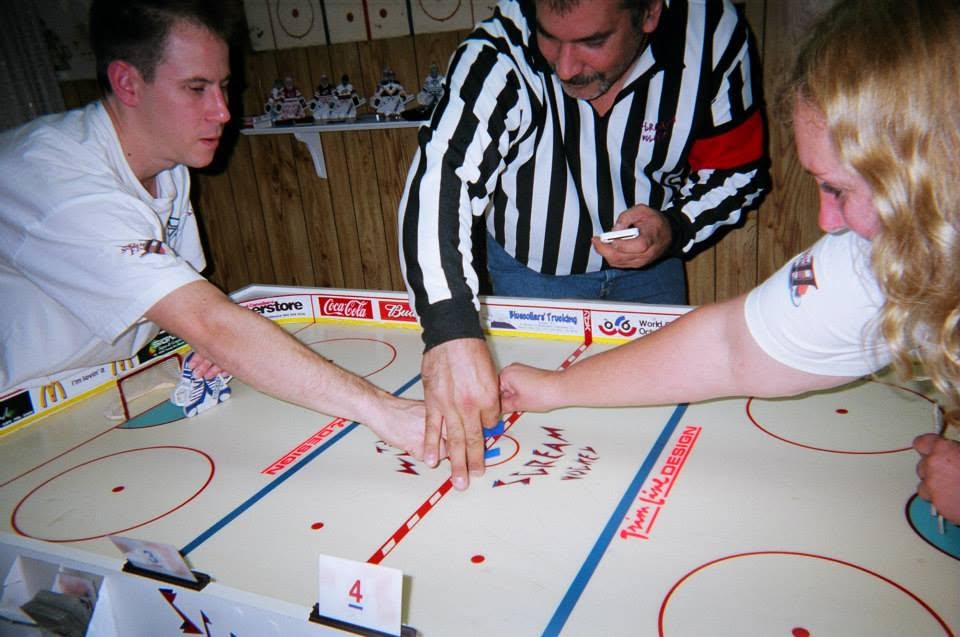
Scream Hockey was born in 1979 in the Lower Mainland of British Columbia, built from almost nothing by a man named Steve Crawford. The first rink was cardboard. The first figures were crude. The first puck was a wheel pulled off a Hot Wheels car. None of that mattered. What mattered was what happened when two people leaned over that surface and started playing — the speed of it, the feel of it, the way the game lived entirely in the player's hands. There were no rods, no levers, no mechanical gimmicks of any kind. From the very first game, Scream Hockey demanded something different: raw touch, hand skill, and an instinct for the figures beneath your fingers.
Crawford refined the game for years. The cardboard gave way to a handmade wooden rink, and eventually to the full-sized custom table that defines the modern era — a resin-coated playing surface, wooden boards, and plexiglass sides. The orange puck replaced the wheel somewhere along the way. But the foundational principle never bent. Every shot and every save is made by hand. It is as tactile and unfiltered as hockey gets.
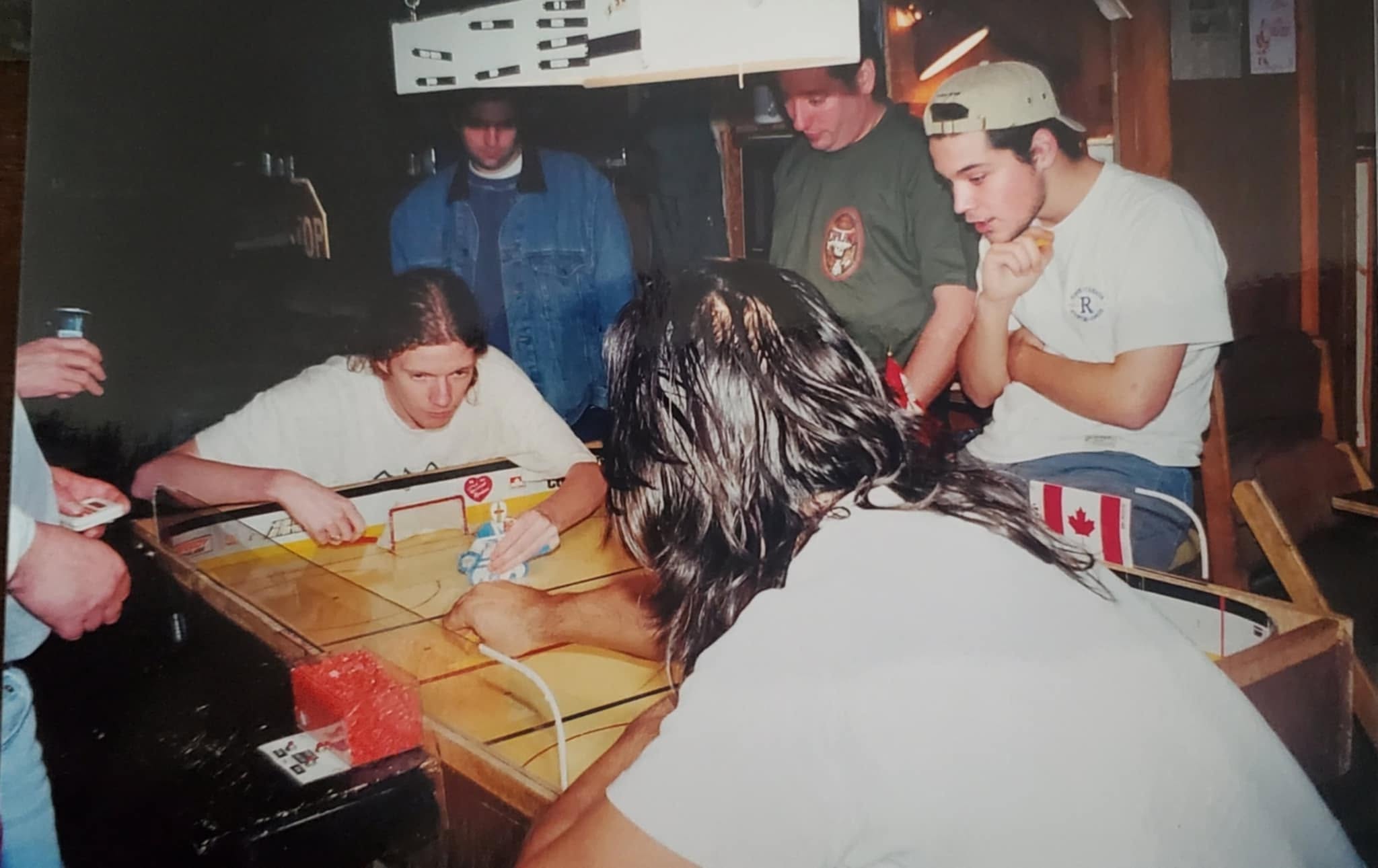
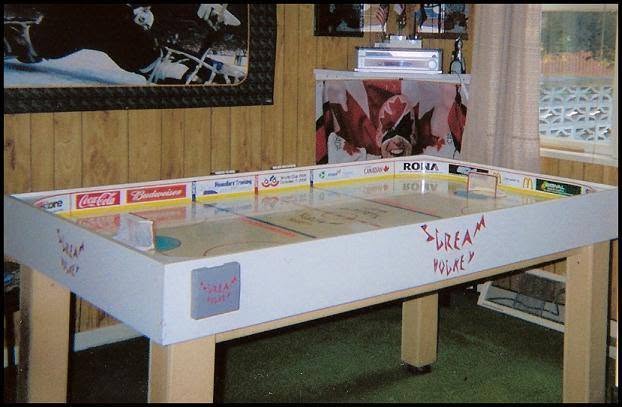
Crawford didn't just invent the game — he owned it. Playing under the banner of the Dallas Black Hawks, he won every championship the league held from 1979 through 2016. Nearly four decades of dominance, unmatched by any franchise before or since. Through the early years, the game travelled wherever Crawford did, set up in rooms and basements, played wherever there was floor space and someone willing to compete.
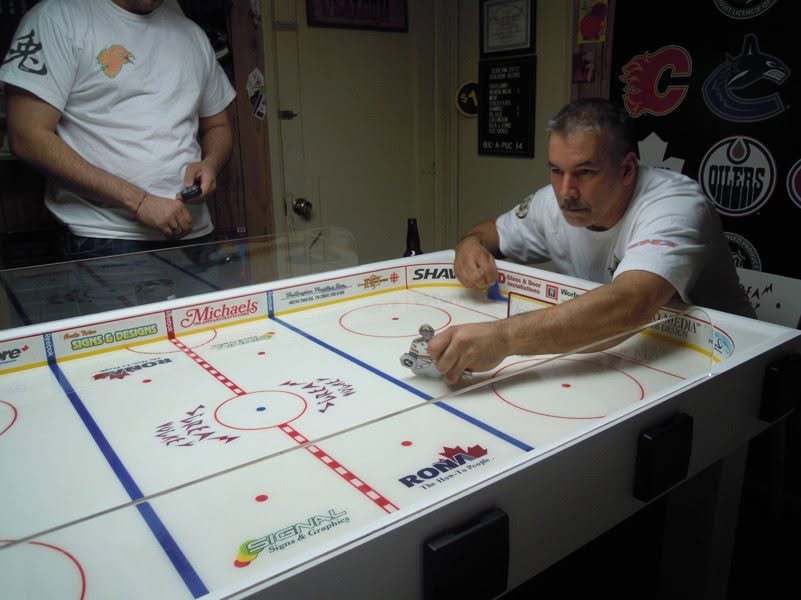
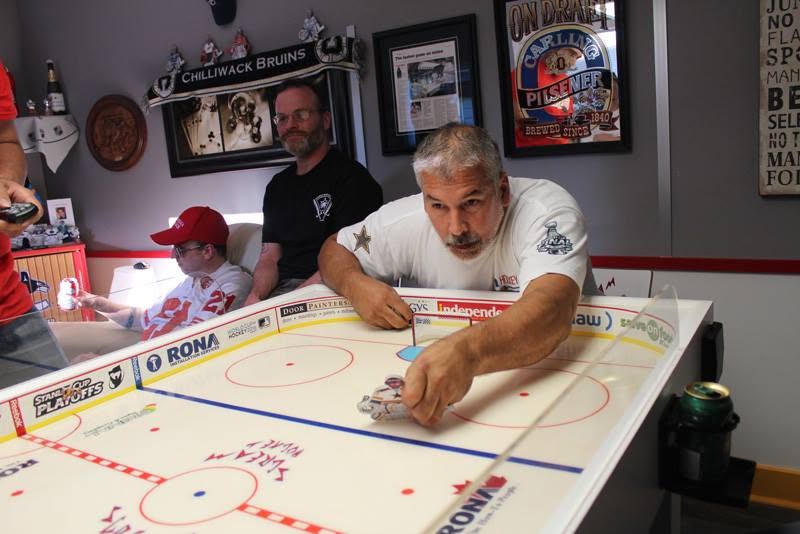
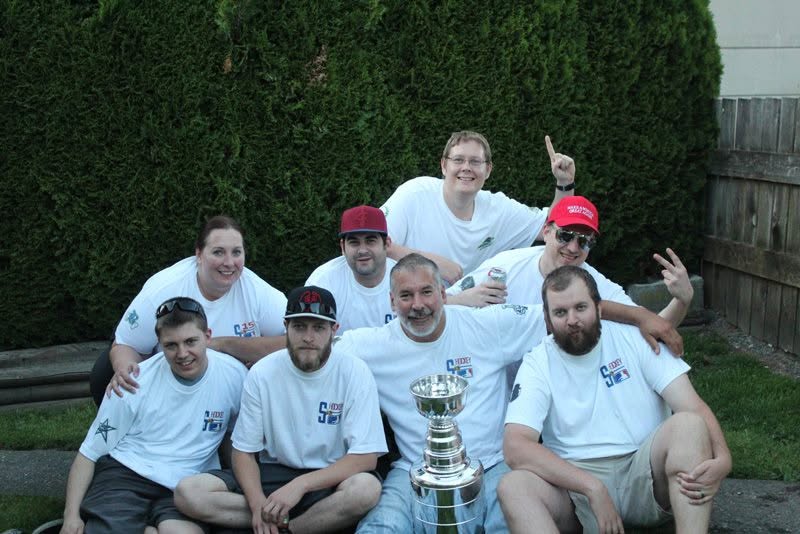
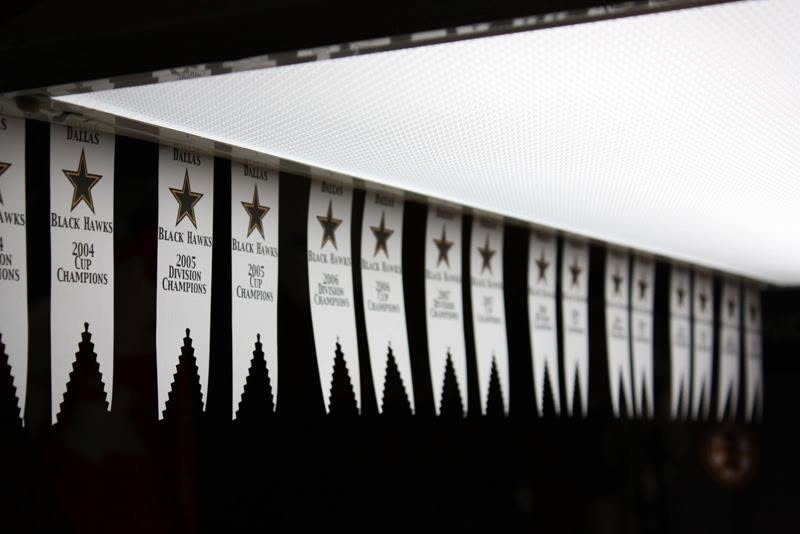
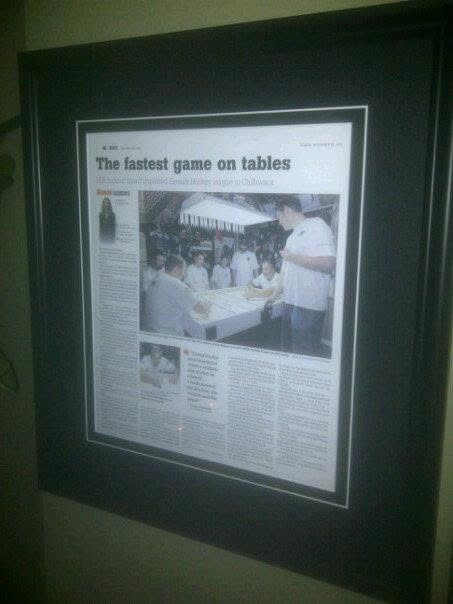
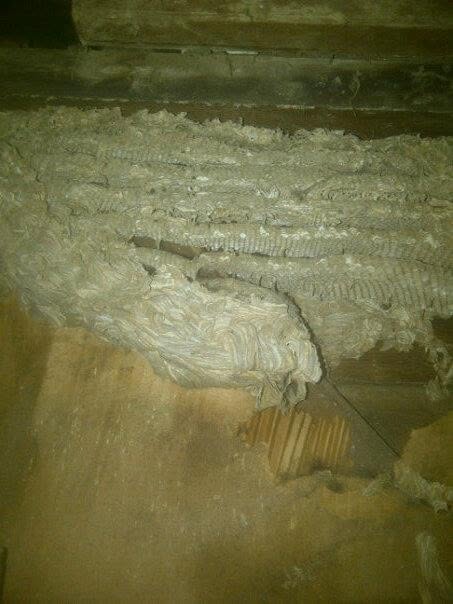
That changed in 2013, when Crawford moved the rink into his shed and gave it a permanent home for the first time. The building was immediately christened the Hive — a name with its own origin story. During construction, a massive wasp nest was discovered behind the boards — twenty inches wide. Crawford briefly entertained the idea of keeping it as a work of art. The nest didn't survive. The name stuck. For over a decade, the Hive was the beating heart of the league, the only arena Scream Hockey had ever known.
After the 2016 season, Crawford stepped away from playing — but not from the game. He stayed on as commissioner, running the league from the Hive and shepherding a new generation of owners through era after era, even as he no longer took his place at the table. For nearly a decade he watched from behind the boards, the founder turned steward. In 2025 he came back for one more run, and in the only way Steve Crawford knew how to do things, he took the Colorado Rampage to the championship. He returned again to defend it in 2026 — but the fire wasn't there. He played the opening week, felt the old grind creep back in, and walked away, saying it simply wasn't fun for him anymore. Week 1 had been a reminder of exactly why he'd stepped away in 2016. He retired for good and closed the Colorado Rampage with him. Not the storybook exit some expected — but an honest one from the man who had built the game from scratch and dominated it for the better part of four decades.

For the 2026 season, the league relocated to its current home: the Crawford Colosseum, named in honour of its founder. The Hive, the shed that had housed a thousand games, was left behind. Chris Dranfield assumed the role of commissioner, inheriting a league whose roots run back to 1979 and whose recorded franchise history stretches across fourteen documented clubs — with earlier teams from the game's first decades still waiting to be catalogued.
The league is older than any team that plays in it today. For its first decades the game ran through clubs whose names and records have largely been lost — franchises that came and went across the 1980s, '90s, and 2000s, long before the modern record-keeping began. The documented era picks up later, with clubs like the Dallas Black Hawks, the LA Prowlers, the Kansas City Outlaws, and the Calgary Chinook, and runs through to the long-tenured survivors of the current age — the Chicago Mob, in continuous competition longer than any other active franchise, and the San Diego Sea Lions. What ties them together isn't a founding date but the game itself: whatever the era, whatever the roster of clubs, it has always been played the same way.
Today, four teams carry the banner: the Phoenix Blaze, the Chicago Mob, the San Diego Sea Lions, and the Nashville Knights. The surface is still resin. The puck is still orange. The game is still played the only way it has ever been played — by hand, by feel, by instinct. Everything else is just the arena.
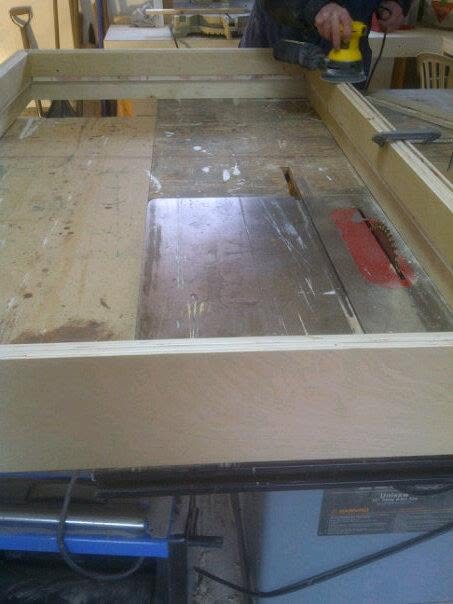
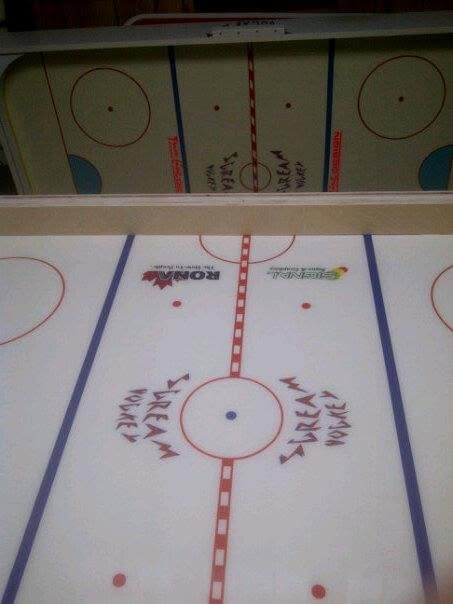
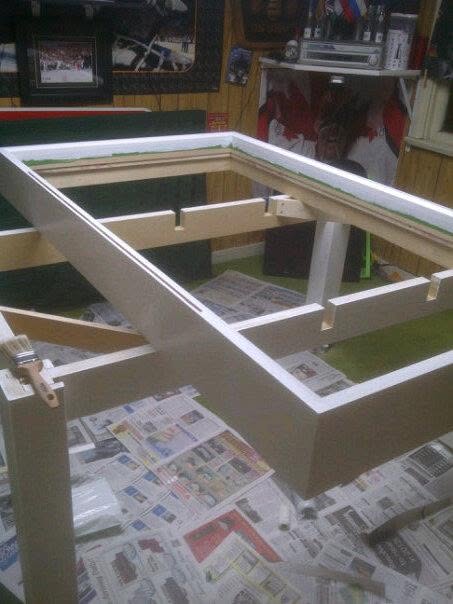
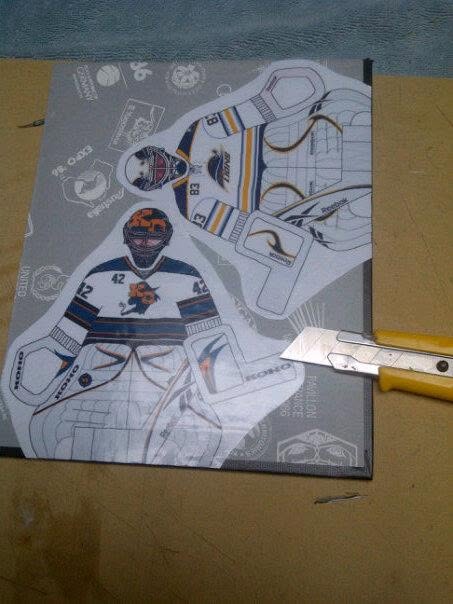
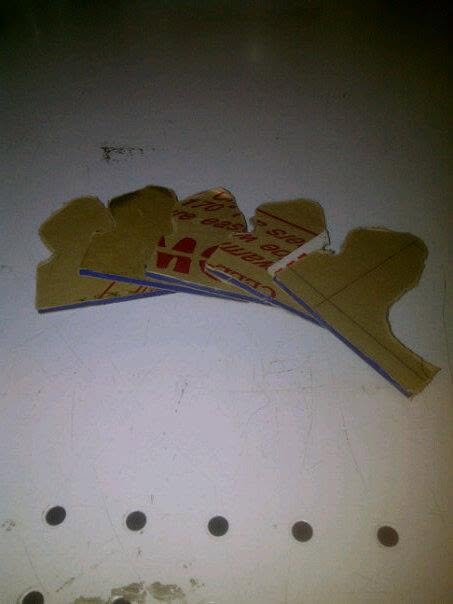
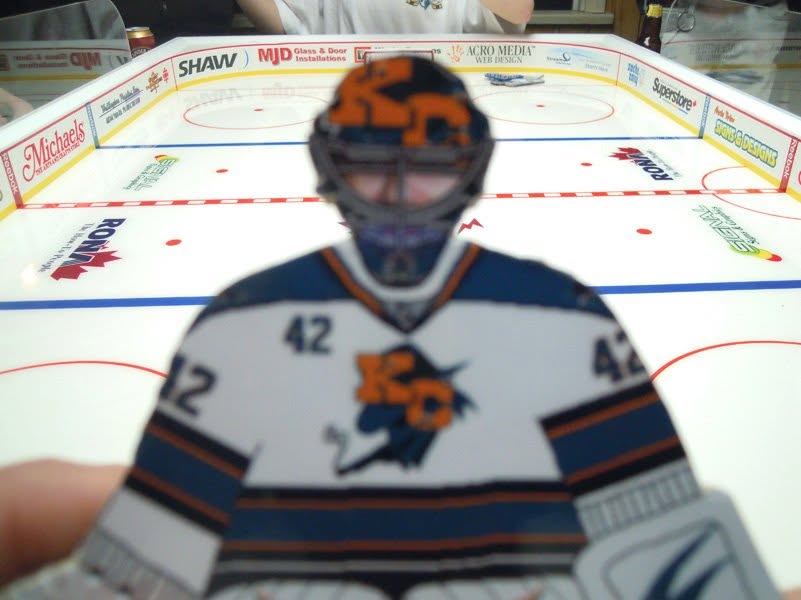
The table in use today was built in 2012 — the third board in the league's history, after the handmade wooden rink of the '90s and the board that carried the game through the 2000s. It was built the same way everything in this league has been: by hand, in the shop. A wooden frame, a plywood surface sanded flat, the lines and logos painted on, boards and plexiglass mounted, and finally the figures themselves — hockey-card artwork printed, cut out by knife, and mounted to stand on the ice. It spent its first season in the spare bedroom at Steve's house, moved to the Hive in 2013, and stayed there through 2025. Every goalie and every skater in the league started as a piece of paper on a cutting mat.